36: Why better fashion instruction isn’t available
No Comments
Down and dirty was how I saw the fashion industry when I entered the field. But my experiences in industry’s factories and designing departments drastically changed my mind.
 |
|
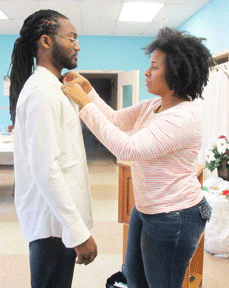
Contemporary Fashion Education student
Nzingha Ma’at fits her husband’s shirt. She
took the pattern off a shirt he owned that
fits him well.
|
I discovered that high-end industrial fashion technology combines the best of international high-end couture and American assembly line production.
In time I came to realize that this technology, most of which is not available to lay people, gives better, more professional results than home sewing methods, AND can be easily used in the home.
I became convinced that this information needs to be made available to the general public. I decided to write it down so lay people could understand and use the same procedures as high-end designing departments. I planned to write a book, put it on the market, and then paint. In art school my professors thought I should become a painter. No one ever urged me to enter the apparel industry.
But one thing led to another. The book project took on a life of its own. One day I realized that the chapters in my book’s outline were books. Then I was asked to teach in college. After five years teaching in the degree program I began teaching continuing professional education courses which enabled me to write courses that presented fashion technology as I thought it should be taught.
My students asked for more courses. The amount of material needed to present industrial procedures turned out to be more extensive than I had thought it would be. Industry encouraged me. Twenty-eight years after being asked to teach in college I’m still at it. In early spring 2023 I finished the eighth and last book in the series.
I’m not making any money, but the business pays for itself. I don’t give up easily. Fortunately I have fabulous students who encourage me, and a supportive family. All of this plus encouragement from industry keeps me going. I thoroughly enjoy what I am doing. I’m meeting wonderful people, both here in Philadelphia and on the net. As has been said, its not the destination, it’s the journey.
Far better clothing than most people can afford to buy can be made at home, if one knows industrial sewing procedures.
In the industry I worked with high-end, expensive clothing styles, rarely seen by most people. These clothing styles are designed and sold exclusively to individual stores. The clothing is then cut and sewn to order in the designing department for the store’s individual wealthy patrons.
The patterns that are drafted to produce a company’s most expensive clothing, are also often used to cut less expensive clothing, the choice of fabrics and construction procedures being industry’s principal methods of reducing costs.
Industrial sewing procedures are both quick and proficient, and are often quite different than those presented in 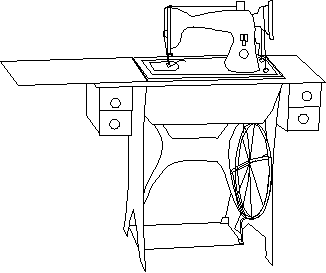 home sewing books. I was surprised to find that in the industry, home-sewing procedures I believed really important were largely ignored. On the other hand, procedures I thought to be of no value were extremely important. I also discovered that the higher end the garment, usually the less equipment needed to make it. A treadle sewing machine, shown on the right, can make clothing worth thousands of dollars.
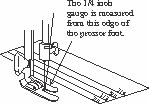
All sewing in industry is done on gauge. A gauge can be made by taping masking tape to the sewing machine’s bed, then marking the gauges on the tape, using a transparent ruler and permanent ink pen. In the industry all drafting and sewing is done to precise measurements. This attention to precise measurements makes it possible to produce clothing that adheres to standardized fit, guaranteeing, at least most of the time, that customers will consistently find clothing, in their designated size from their preferred manufacturer that fits.
When I tried these procedures at home it became clear that these procedures can be used IN THE HOME to produce quality clothing for oneself and one’s family that fits and looks good.
Why isn’t this information available to the general public?
The factories train their personnel. New operators begin with setting hems, gradually upgrading their skills. This method, used by factories to train their personnel, greatly reduces the amount of training and time needed for operators to become proficient. Line assembly enables many people, each with specialized skills, to quickly produce professional clothing. But most factory personnel are not cross-trained, cannot make an entire garment as sewn in industry, and do not have the design room skills needed to draft patterns to a precise fit. Nor do they have the education or contacts to produce and market books that present how the industry sews.
Patternmakers and designers, many of whom do have the education and contacts, do not do the sewing. Many do not know sample making (how industry sews). Their jobs pay well. Even if they do know sample making, both they and the factory personnel may not have the time or money to write books that may never sell.
College fashion programs pay fashion and other professors much less than industry pays. Many, if not most fashion professors do not know sample making, some may not even know that industry uses a different method. Colleges hire professors who have college. Most sample makers, having come up through the factories, do not have college. Learn more about fashion education’s problems.
It is my firm belief that this information should be available to laypeople. That is why I wrote my books, testing them with my students to make sure the material can be understood and used.
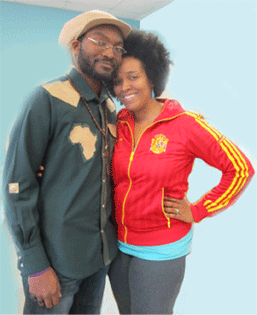
The African shirt design Lance is wearing can be ordered in three sizes. Contact Nzingha Ma’at for more information. Phone 215-275-4117 or e-mail
Watch this blog for more information about Contemporary Fashion Student entrepreneurs. Contemporary Fashion Students include entrepreneurs, fashion industry personnel, students who wish to enter the fashion industry, and people who wish to sew more professionally for themselves and their families.
For more information about my books visit http://www.laurelhoffmann.com/
More later,
Laurel
LaurelHoffmann-YouTube
https://laurelhoffmann.com/
https://www.facebook.com/CFashionEdu
https://www.linkedin.com/in/laurelhoffmann/
https://www.instagram.com/laurelhoffmann4015/
RSS Feed: https://laurelhoffmann.com/blog/
https://www.ravelry.com/projects/LaurelHoffmann
https://www.yelp.com/biz/laurel-hoffmann-oreland
https://www.thumbtack.com/pa/philadelphia/drawing-lessons/fashion-drafting-sewing-books-classes
©Laurel Hoffmann, 2014, all rights reserved.
Professional Drafting and Sewing Books
-
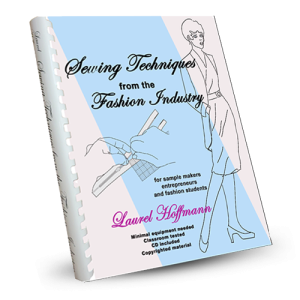
 Sewing Techniques from The Fashion Industry
$151.00
Sewing Techniques from The Fashion Industry
$151.00
-
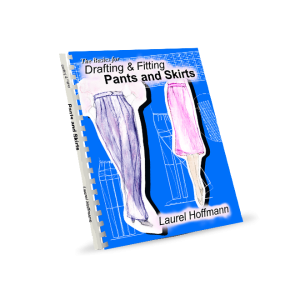
The Basics for Drafting & Fitting Pants and Skirts
$135.00
-
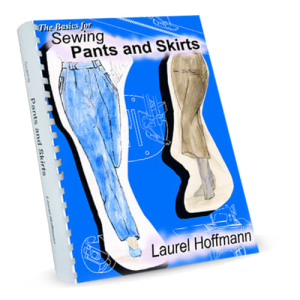
The Basics for Sewing Pants and Skirts
$188.00
-
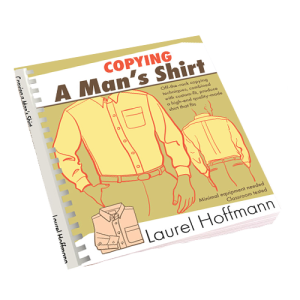
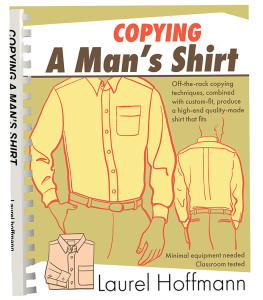
Copying a Man's Shirt
$153.00
-
Grading to Fit
$196.00
-
Grading & Sewing a Blouse to Fit
$152.00
-
Grading a Woman’s Jacket to Fit
$153.00
-
Tailoring a Woman’s Jacket
$128.00