33: Starting a Clothing Factory
No Comments
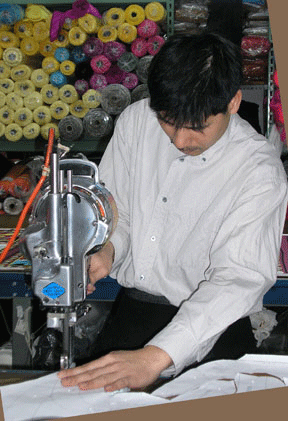
Want to know what is involved in running a clothing factory?
Ever think about starting one?
Here’s some information about starting a clothing factory:
Start up finances:
You will need at least $90,000, probably more that you can afford to lose.
Essential personnel:
Factory supervisor
Accountant
Production pattern maker/technical designer to draft patterns
Sample maker/forelady to train and supervise sewing
Factory workers
Cutters
Sewing machine mechanic
Operators – (seamstresses who do piece work on the line)
Packers
Clothing production:
1. Line assembly relies heavily on hierarchy with each person assigned a task or tasks. Most know only the task they perform. Most factory personnel do not understand the process from start to finish. There are various methods used to produce patterns and to sew garments. Most home sewing and custom methods cannot be used in the industry.
Industrial methods can best be described as low-level engineering. Patternmaking must be to 1/32 of an inch, sewing to 1/16 of an inch. Grade rules determine the fit throughout a size range. Patterns must be drafted to the grade-rule measurements. Sewing must be sewn on gauge to maintain the grade-rule fit and the customers’ fidelity.
2. The steps in the process vary, depending on the type of garment being manufactured.
3. Sewing skills vary from person to person and from factory to factory. An operator may be proficient at setting sleeves, but not know how to set a collar. A patternmaker may not be able to sew samples, a sample maker may not be able to draft patterns.
4. Factory personnel (and design room personnel, once out of college) learn their trades by oral tradition. Books aren’t used. No one sits in a class. The instructor (usually the forelady) sits by the new trainee who observes, learns, and memorizes the sewing procedure.
A newly hired sewing machine operator is first instructed how to sew on gauge. The instructor gives the trainee strips of fabric to sew on gauge. The trainee then practices alone until proficient – about an afternoon’s length of time.
After learning gauge sewing the trainee is taught the easiest step in the manufacturing/sewing process. Once the second lesson is learned – usually within an hour or so, the trainee is now sewing on the line. It’s possible for one instructor to train as many as 10 new seamstresses at a time.
5. Before a clothing style is sent to the factory every detail must be tested and written down in the designing department, then checked and rechecked for possible error. These instructions are sent with the patterns to the factory. The factory follows these procedures to the letter, conferring with the designing department when necessary. Factories are often required by independent designing departments to first make a sample for approval before being given the OK to manufacture the garment. Several factories may bid on the contract, each sending in a sample as part of the bidding.
Design room procedures include: designing the type of clothing to be made, drafting the patterns, making samples, and grading the patterns. A set of graded patterns, a pattern check (sample garment cut and sewn from the sample size) a Cutter’s Must list (of the pieces that make up the garment) and markers (layouts) are sent to the factory. Some of this may be digitized if the factory is computerized.
Designing departments cut and sew sample garments. If the company also has a couture line, those garments may also be cut and sewn in the designing department. But this is unusual.
6. Every step of the sewing operation is timed. Union operators are paid a base amount per hour regardless of how many pieces they sew. If they sew more than the minimum amount of pieces they are then paid extra. Most operators exceed the minimum number of pieces expected in the time frame given for those pieces. Careful recording of each operator’s output is kept. If the excess exceeds a certain number then the number of minimum pieces required before the operator will be paid extra may be increased. An industrial machine does one type of operation only.
7. If a factory switches to another clothing style new machinery may be needed. An industrial sewing machine costs from $1000 used, up to $10,000, maybe more. For this reason and many others, factories specialize in particular types of clothing. Any change in production often requires relocation of machinery as speed is essential. Since machinery is bolted down to the floor, even that small a change requires financial justification.
8. Mass-production produces huge quantities of clothing. Factories traditionally cut 1000 garments at a time, although small shops may cut as few as 500 at a time. A shop of 80 seamstresses can produce 450 or more lined sleeveless jumpers with back zippers and ties in a day. A sample maker can sew 6 in one afternoon.
A T-shirt takes 5 minutes to sew. If the factory operates 6 hours a day, 5 days a week, each operator can produce 72 shirts a day, 360 a week. A small factory of 10 operators can produce 3600 T-shirts a week.
Small orders of 20 or 30 garments must be combined with many other small orders if a factory is to be profitable. Most factories need to produce generic, average sized clothing for a national market if they are to be successful.
9. Pricing is determined by cost of materials.
Estimated cost to produce a $30 T shirt
60 inch knit fabric – wholesale – 1 yard $3.00
Ribbing – wholesale – 22 inches .50
Thread .50
4.00 (40% of total costs)
6.00 residual costs
10.00 wholesale price
X 3 $30.00 retail price
10. Costing must allow for seconds, possible theft, cancelled orders, and charge backs. It’s well known in the industry that if 1000 garments are sent down the line and 1000 come off, the garment is not going to sell in the stores.
…when…[Liz Claiborne, Inc.] …when public in 1981, it reported net income of $10 million on sales of $117 million.
New York Times Business, February 5, 2014, page B10.
This highly successful company was making less than 10% net profit. The company was manufacturing in Hong Kong.
Suggested brief evaluations to determine if a project is feasible:
1. Survey a selected small typical group of potential factory workers whom you hope to train – maybe 10. Keep a chart of the answers.
a. Ask if they have ever sewn.
b. Ask if they would be interested in sewing in a small factory.
c. If they are interested, have them sew fabric strips on gauge on a basic industrial sewing machine (industrial, single-needle, straight-stitch machine with a bobbin.)
d. If they are still interested, have them sew a few muslin samples, such as a mock up sleeve set or collar to determine if they have hand dexterity, or can develop it.
2. Evaluate the machinery available. One must look carefully at what machinery is needed for suggested projects and then try to choose projects that can be sewn with existing machinery. Most industrial sewing machines do one operation. Some can be switched to additional operations, but a mechanic must do this.
3. Write a brief business plan that sets up the proposed product’s manufacturing procedures. Look carefully at what machinery is needed for suggested project(s), then try to choose projects that can be sewn with existing machinery.
a. Write the step-by-step procedure required to sew the garment. List the machinery needed to do each operation, availability, & cost of that machine.
For example: a T-Shirt from a reputable mail order company
1. Hem pocket with cover stitch machine
2. Sew pocket to front shirt with single-needle lockstitch machine
(a basic straight –stitch sewing machine with a bobbin)
3. Lockstitch the shoulder
4. Lockstitch neckband closed
5. Cover stitch neckband
6. Band back neckband and shoulder – probably a cover stitch machine
7. Set sleeves with cover stitch machine
8. Mock-stitch side seam/sleeve seam
9. Hem body and sleeve with cover stitch machine
b. If making the proposed garment looks feasible, list the machinery needed and its cost
Machinery needed to make the T-Shirt:
1. Lockstitch machine (straight stitch machine with bobbin)
2. Cover stitch machine
3. Mock-stitch machine (4-thread overlock – NOT a safety-stitch)
4. A fourth sewing machine may have been used to finish the shoulder seams – there are so many different types of industrial sewing machines, I can’t be sure.
c. To make sure manufacturing this garment will be profitable add:
1. Layouts with yardages
2. Cutters Must list of all fabric pieces
3. Time chart for sewing each step of operation
4. Cost sheet
4. Determine whether there are national markets for this clothing. Reps wholesale garments to stores throughout the USA. Asking a rep if the product will sell nationally may yield valuable information about the validity of this project. At least one rep, probably more will be needed to market the clothing, as they serve different regions throughout the USA. They often represent more than just one manufacturing company. Since they work on commission, it’s in their interest to sell as many garments as possible.
Attending a trade show at the Javits Center in NYC will also yield information about the feasibility and market for the intended garments. Some reps sell clothing for several manufactures at trade shows.
Other factories are competing for work. The industry does not copyright most garments. What matters is marketing and price competition: getting something new on the market first and keeping the price below the competitor’s.
Any garment can be copied and off a competing factory’s line within a week. Price matters to the consumer. Companies often compete by reducing their product’s wholesale price by $.50 ($1.50 retail). This is enough to put a small startup out of business overnight. Reps have been known to take a product to another company and ask them to produce it at a lower price.
Laurel
LaurelHoffmann-YouTube
https://laurelhoffmann.com/
https://www.facebook.com/CFashionEdu
https://www.linkedin.com/in/laurelhoffmann/
https://www.instagram.com/laurelhoffmann4015/
RSS Feed: https://laurelhoffmann.com/blog/
https://www.ravelry.com/projects/LaurelHoffmann
https://www.yelp.com/biz/laurel-hoffmann-oreland
https://www.thumbtack.com/pa/philadelphia/drawing-lessons/fashion-drafting-sewing-books-classes
©Laurel Hoffmann, 2014, all rights reserved.
Professional Drafting and Sewing Books
-
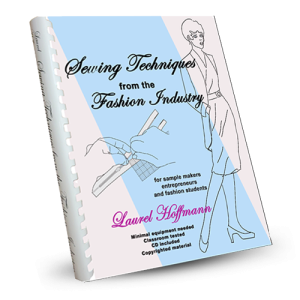 Sewing Techniques from The Fashion Industry
$151.00
Sewing Techniques from The Fashion Industry
$151.00
-
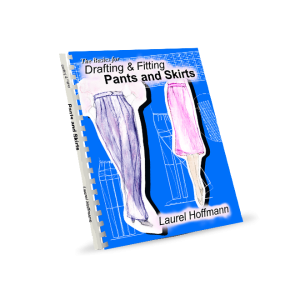 The Basics for Drafting & Fitting Pants and Skirts
$135.00
The Basics for Drafting & Fitting Pants and Skirts
$135.00
-
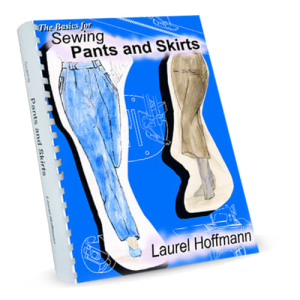 The Basics for Sewing Pants and Skirts
$188.00
The Basics for Sewing Pants and Skirts
$188.00
-
 Copying a Man's Shirt
$153.00
Copying a Man's Shirt
$153.00
-
 Grading to Fit
$196.00
Grading to Fit
$196.00
-
Grading & Sewing a Blouse to Fit
$152.00
-
Grading a Woman’s Jacket to Fit
$153.00
-
Tailoring a Woman’s Jacket
$128.00