31: Sample Making Defined
If you are looking for a better sewing method, sample making is the sewing method you should consider.
This is why:
1. It ensures satisfactory results because it gives control over each step involved in the making of a garment.
2. It can be used in both the home and in mass-production.
3. Only a few simple drafting and sewing tools are needed.
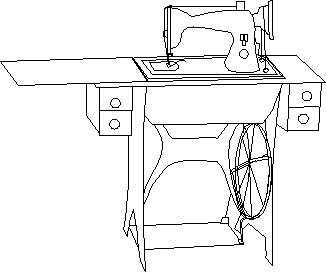
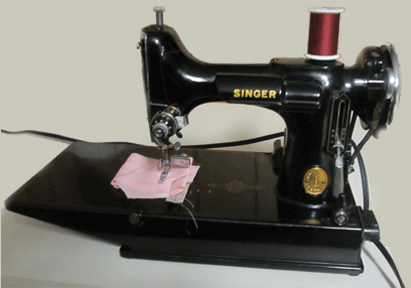
4. Sample making on any lock-stitch sewing machine, a treadle, shown on the right, or feather-weight sewing machine, shown below. Treadles and feather-weight sewing machines can be used to make almost any garment, including coats. (Lock-stitch sewing machines have bobbins.)
4. Sample making’s reliable, dependable, versatile procedures ensure satisfactory results because they give control over each step of the pattern making/sewing operation.
5. More than one person can work on a garment. The industrial sewing procedures used in sample making allow mass-production where many people work on the same garment, which, when finished is professional and can be sold. No other sewing method can make that claim.
What is sample making? Sample making is the sewing of a complete garment, usually by one person, using industrial sewing procedures.
What is a sample garment? A sample garment is an item of clothing used in the fashion industry to represent a clothing style that will be, or is being mass-produced in a range of sizes. Sample garments are usually made in designing departments by the best seamstresses in the company. Most sample makers have worked up through the factory where they learned the company’s industrial sewing procedures.
 How does sample making differ from mass production? The methods used in making sample clothes are the same as those used in mass production with one exception: one person sews a sample garment together, while many people are involved in the making of a mass-produced garment. (Design Room Techniques, © 2010, Laurel Hoffmann, page 3, All rights reserved.)
What are some of the methods used in mass production?
1. The pattern must fit before the fashion fabric is cut.
2. The patterns have varying seam allowances, preventing the need to trim seam allowances after they are sewn.
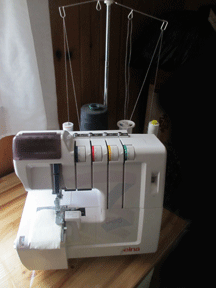
For example: when sewing on an overlock (home sewers call these machines sergers – shown above on the right) the pattern is given a seam allowance that is the bit width (the distance from the needle to the knife, usually 3/8 inch). The knife cuts just the loose threads as the seam is sewn.
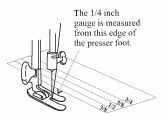
3. All sewing is on gauge.
4. Seams are sewn notch-to-notch, eliminating most pinning.
5. Pattern making is accurate to 1/32 of an inch, sewing to 1/16 of an inch.
6. The sewing machine’s settings are determined by sewing scraps of the intended fashion fabric before the actual sewing of the garment begins.
7. The pattern is checked for all problems before the fabric is cut – for example: the pattern’s sleeve cap is walked around the pattern’s armhole to check and correct the notches if needed.
What is the true benefit of using sample making procedures? One has control over the entire process from choice of the pattern through completion of the garment. The method ensures satisfactory results because it is reliable.
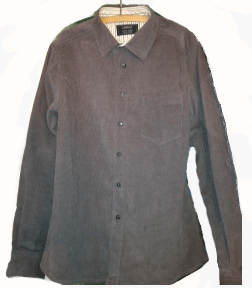
Christine’s shirt, sewn using sample making procedures.
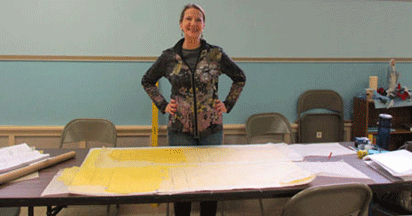
Debie, drafting patterns in class.
Where can you learn sample making techniques? Private lessons are taught in Oreland, Pennsylvania, one mile from the PA Fort Washington Turnpike exit. . The courses include pattern making, fitting, grading and sewing. Students draft patterns and sew to fit themselves. All procedures are as done in high-end designing departments.
Call Laurel at 215 884 7065.
Laurel
LaurelHoffmann-YouTube
https://laurelhoffmann.com/
https://www.facebook.com/CFashionEdu
https://www.linkedin.com/in/laurelhoffmann/
https://www.instagram.com/laurelhoffmann4015/
RSS Feed: https://laurelhoffmann.com/blog/
https://www.ravelry.com/projects/LaurelHoffmann
https://www.yelp.com/biz/laurel-hoffmann-oreland
https://www.thumbtack.com/pa/philadelphia/drawing-lessons/fashion-drafting-sewing-books-classes
©Laurel Hoffmann, 2014, all rights reserved.
Professional Drafting and Sewing Books
-
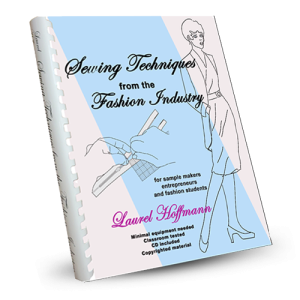
 Sewing Techniques from The Fashion Industry
$151.00
Sewing Techniques from The Fashion Industry
$151.00
-
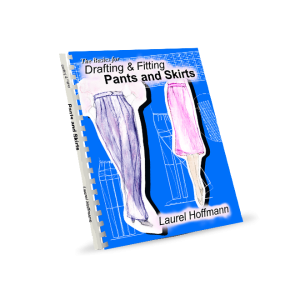
The Basics for Drafting & Fitting Pants and Skirts
$135.00
-
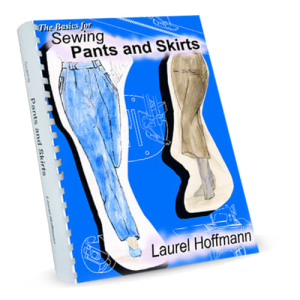
The Basics for Sewing Pants and Skirts
$188.00
-
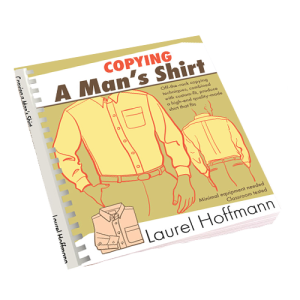
Copying a Man's Shirt
$153.00
-
Grading to Fit
$196.00
-
Grading & Sewing a Blouse to Fit
$152.00
-
Grading a Woman’s Jacket to Fit
$153.00
-
Tailoring a Woman’s Jacket
$128.00