156: The Fashion Industry – Myths & Truths
Blog, fashion_engineering, fashion_history, fashion_technology, Industrial vs home sewing, manufacturing, Problems_with_fashion_education
No Comments
by Laurel Hoffmann, technical designer/production pattern maker
Years ago I had very bad opinions about the fashion industry. The only reason I entered the fashion industry was because I needed money. I believed the industry to be down and dirty; that industry kept their procedures secret because they don’t want competition from home sewers. Neither opinion turned out to be true. Once hired, this is what I learned:
1. The industry is down and dirty – Yes and No
Price determines quality. Every step in the process of developing a style is priced. The finished product must meet a price point their target customers can afford and that enables the company to make a profit.
What many people can afford is poorly made. They judge the industry on the clothing available at their price range. Most never visit high-end stores. What they see of industry’s products is inferior: clothing made from cheap fabric that falls apart quickly.
There has been a steady decline in clothing quality. Over time fewer and fewer people made their clothing. Knowledge of how good clothing is sewn was slowly forgotten. At the same time industry was discovering faster and cheaper ways to manufacture clothing.
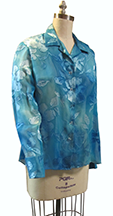
Most clothing manufacturers produce several lines of clothing. A few manufacturers produce high-end lines, cut and sewn in the designing department for preferred customers. Preferred customers often order clothing from specialty departments’ samples that may be hidden from the average customer. Quality clothing is very expensive. But if one knows sample making, quality clothing can be produced in the home at minimal cost.
2. The industry keeps their procedures secret – they don’t want competition from home sewers
This is nonsense. There is no way home sewing can compete with either the industry’s speed or its economic efficiency. Plus, because industry is line assembly, there are no secrets to keep, since many in the fashion industry do not know the jobs of the workers sitting next to them.
Industry’s fitting and sewing methods, developed and vastly improved in the USA during the First and Second World Wars, are used throughout the global fashion industry. They are not generally available to the general public for these reasons:

Many in the fashion industry do not know the general public has no access to this information.
Few have the skills or time to make this information available. One would have to be trained in a series of positions in the industry – such as grading, pattern making, sample making, and layouts; have writing skills; have the opportunity to classroom test the material; be financially independent; be computer literate; have reason to sew at home where the material could be tested in a home-based situation; and also have time to write. For the few who do have these skills, industry pays very well.
There would be no guarantee that writing instruction books would ever be profitable.
Many people don’t like change. Most sewing, outside of industry, is done the old-fashion way used back in the 1800s. Books, many classes and education programs, continue to present the old (home sewing) methods. For that and other reasons, most fashion graduates never work in the fashion industry.
Industry’s sample makers know modern sewing techniques, but are not generally college educated, so are not asked to teach in college. Although home sewing methods are clumsy and difficult, home sewing methods are generally taught in fashion programs because the teachers who are available know those methods. Home sewing methods are not, and cannot be used in industry.
Many think one needs to first learn these old-fashioned, home sewing methods before learning industrial methods. NOT true! Although some procedures are the same, first learning home sewing, then industrial sample making (making a complete garment using industrial sewing procedures) causes confusion. The methods used in industry are logical. This is a low-level engineering program. Its principles underlie all engineering programs.

Thanks for reading,
Laurel
UTube
https://laurelhoffmann.com/
https://twitter.com/LaurelHoffmann1
https://www.facebook.com/CFashionEdu
https://www.linkedin.com/in/laurelhoffmann/
RSS Feed: https://laurelhoffmann.com/blog/
https://www.ravelry.com/projects/LaurelHoffmann
https://www.thumbtack.com/pa/philadelphia/drawing-lessons/fashion-drafting-sewing-books-classes
Professional Drafting and Sewing Books
-
 Sewing Techniques from The Fashion Industry
$151.00
Sewing Techniques from The Fashion Industry
$151.00
-
The Basics for Drafting & Fitting Pants and Skirts
$135.00
-
The Basics for Sewing Pants and Skirts
$188.00
-
Copying a Man's Shirt
$153.00
-
Grading to Fit
$196.00
-
Grading & Sewing a Blouse to Fit
$152.00
-
Grading a Woman’s Jacket to Fit
$153.00
-
Tailoring a Woman’s Jacket
$128.00