
107: Grading – How Fit and Sizing are Achieved

Knowledge of American manufacturing technology enables beautiful clothing to be made in the home
It is my belief that the technology developed by the American manufacturing companies back in the 1940s and 50s should be available to the general public. This technology can be easily used in the home. With minimal equipment, you can make custom-fitted garments worth thousands of dollars. You just need the information so you can learn how it is done.
Development of Standardized Sizing
In 1947 sizing was…receiving great attention in America…. The National Bureau of Standards in Washington was giving the world the lead in standardized sizing (History of 20th Century Fashion, Elizabeth Ewing, pg 154).
More about the development of apparel manufacturing in the USA is on this blog’s previous post.
This move into better sizing systems was copied by apparel manufacturing companies throughout the Western World. For example: Peggy Page... [was] one of the first British companies to move ahead of the crowd by manufacturing to the sizing and [sewing] standards set up by the Americans…. (History of 20th Century Fashion, Elizabeth Ewing, pg 211.)
Grade rules vary
Standardized sizing is used by the home sewing patterns industry, mail order, and many other apparel manufacturing companies.
But standard sizing does not fit everyone. Many apparel manufacturing companies have developed their own grade rules, which may fit quite differently than standard-sizing’s grade rule.
About grade rules
Grade rules are used to achieve consistent fit.
All grade rules begin with a sample size sloper, usually a size about midway in the grade-rule’s size range. A sloper is a close-fitting pattern from which style patterns are developed.
In order to assure that the manufactured clothing will fit the company’s market, the sample-size garments are carefully drafted and fitted to the grade-rule’s measurements.
Patterns are graded AFTER the sample size is approved for production
After the sample-size garment is approved for production and has sold, its patterns are graded. (First one sells it, then one makes it.)
Grading produces garments that both fit the grade-rule’s sizes and maintain the style. Cutting and checking all of the individual sizes is usually not needed.
If patch pockets (which do not grade) or other styling features may look too large or too small on the largest or smallest sizes in the grade rule, the garment may be cut and sewn in the designing department in a small and/or large size to make sure the garment style retails its styling throughout the size range. If there is a problem, the style will not be made in the smaller or larger sizes.
Size labeling
The size indicated on a woman’s garment label is industrial jargon for the grade rule’s entire set of measurements that determine the fit of that particular size. That is the reason one company’s size 10 may fit another company’s size 2. As a rule, the lower the size, the more expensive the garment. One pays for flattery.
Men’s graded-clothing clothing is labeled with actual measurements.
The three methods used to grade
1. The computer
Today designing departments grade their patterns on the computer. After a garment style’s pattern is drafted to the grade rule’s sample size measurements, fitted, approved, and sold; the sample-size pattern is plotted into the computer, a button is pushed, and the garment style’s patterns are graded in seconds to the grade-rule’s measurements previously programmed into the computer.

2. Use of a grading machine
In the past grading was hand done with a grading machine. The garment’s sample-size pattern, cut from 2 plies of oak tag that were stapled together, was clamped into the grading machine. Oak tag was positioned under the sample-size pattern and held firmly in place with weights or push pins.
The sample-size pattern was moved in and out, up and down in a series of moves. With each move a section of the sample-size pattern was marked on the underlying oak tag. The underlying oak tag was then removed and cut to produce the size pattern that had just been graded.
Although the graded sizes were usually produced from the sample size pattern, any graded size in the grade rule could be used to grade any other size in the grade rule.

3. Grading by hand
Grading can also be done by hand.
Advantages of understanding grading

Understanding how grading works enables one to grade patterns to a custom fit, grade from one grade rule to another, and grade style changes into patterns.
Custom grading maintains the style of the original style pattern much better than fitting by hand.
Grading to Fit, the 500 page book I have just finished and am about to put on the market, shows how to do this.
With the book come a set of standard-size slopers, size 2 through 30. The reader develops a set of custom-fitted slopers from her size slopers. She then compares her custom-fitted slopers with the original standard-size slopers (that she used to produce the custom-fitted slopers) to produce her grading coordinates. She then uses her coordinates to custom-grade home-sewing patterns to her fit.
Sound hard? Not so. This classroom tested book takes you through the material step-by-step. Learning how to grade your patterns to fit you is worth the effort. It’s faster, it’s easier, AND you are saved the misery of fitting each and every pattern you use.
This is the x-y plotting method you learned in grade school. It’s the location system used in GPS, for placing satellites in the sky, and for many other uses. It is also used to grade patterns to fit.
I’m currently grading the slopers. When the slopers are finished the book and slopers will be available for sale on this blog at whole-sale price to my readers.
All of my books have charts and references to enable custom fit, no matter what figure problems one might have. With this information you sew slower, finish faster, producing beautiful clothing that enhance your looks and life-style.
http://localhost/cfashion/
https://twitter.com/LaurelHoffmann1
https://www.facebook.com/CFashionEdu
https://www.linkedin.com/in/laurelhoffmann/
https://www.ravelry.com/projects/LaurelHoffmann
https://www.thumbtack.com/pa/philadelphia/drawing-lessons/fashion-drafting-sewing-books-classes
215 884 7065
© Laurel Hoffmann, 2019.

Professional Drafting and Sewing Books
-
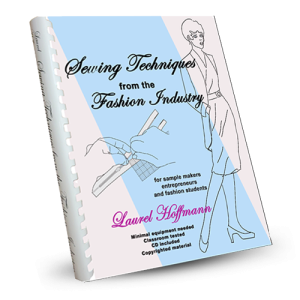 Sewing Techniques from The Fashion Industry
$151.00
Sewing Techniques from The Fashion Industry
$151.00
-
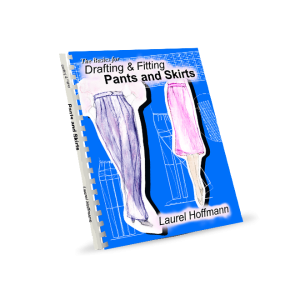 The Basics for Drafting & Fitting Pants and Skirts
$135.00
The Basics for Drafting & Fitting Pants and Skirts
$135.00
-
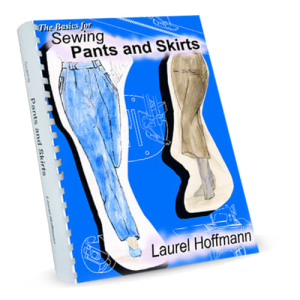 The Basics for Sewing Pants and Skirts
$188.00
The Basics for Sewing Pants and Skirts
$188.00
-
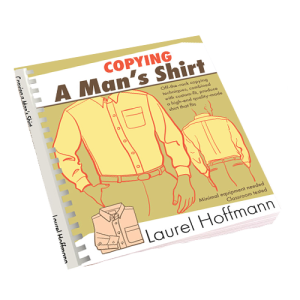 Copying a Man's Shirt
$153.00
Copying a Man's Shirt
$153.00
-
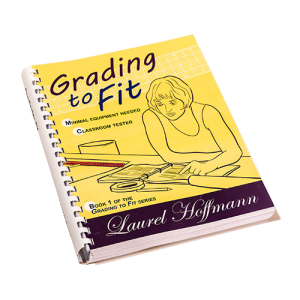 Grading to Fit
$196.00
Grading to Fit
$196.00
-
 Grading & Sewing a Blouse to Fit
$152.00
Grading & Sewing a Blouse to Fit
$152.00
-
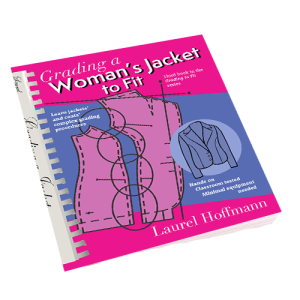 Grading a Woman’s Jacket to Fit
$153.00
Grading a Woman’s Jacket to Fit
$153.00
-
 Tailoring a Woman’s Jacket
$128.00
Tailoring a Woman’s Jacket
$128.00
2 Comments. Leave new
Great information that makes me want a copy of all your grading books. Keep me posted as to when i can purchase them. You are such an inspiration.
Thanks Jeannette!